• Skip to primary navigation
  • Skip to main content
  • Skip to primary sidebar
  • Home
  • Privacy Policy
  • Help

Lake Holiday News

Everything you need to know about Lake Holiday ...

  • History
  • Videos
  • Sound Bites
  • Docs
  • Gallery
  • Silent Sitters
You are here: Home / 2008 / Archives for January 2008

Archives for January 2008

A Proxy Policy To Battle Dissidents

January 27, 2008 By LakeHolidayNews

LHCC’s proxy policy was one of the most important topics discussed at the December 27th meeting. The board uses the proxy policy to unfairly restrict the opportunities that LHCC members have to express their opinions in elections. This policy is one of the board’s principal weapons to attack what it calls “the dissidents.” Using characteristic put-downs, the board describes those who vote by proxy as “less sophisticated.”

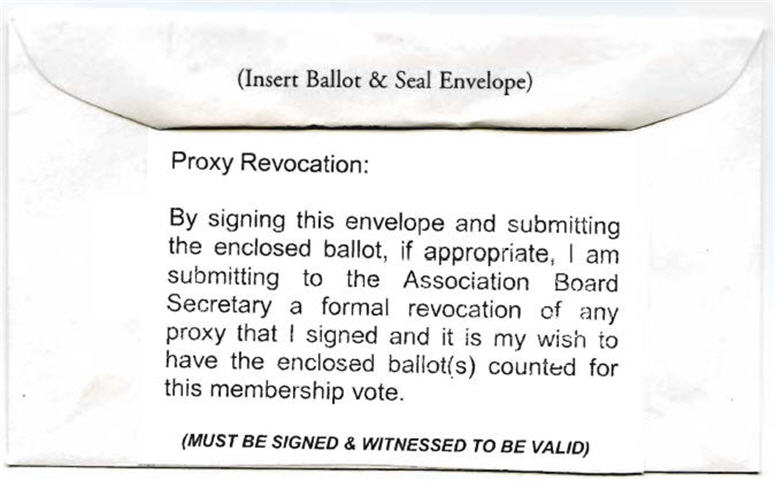
The most visible sign of LHCC’s efforts to block the use of proxies is right on the ballot envelope itself. In 2005 the ballot envelope didn’t contain any mention of proxies. In 2007, “proxy revocation” is front and center. Compare the 2005 ballot envelope to the 2007 version:
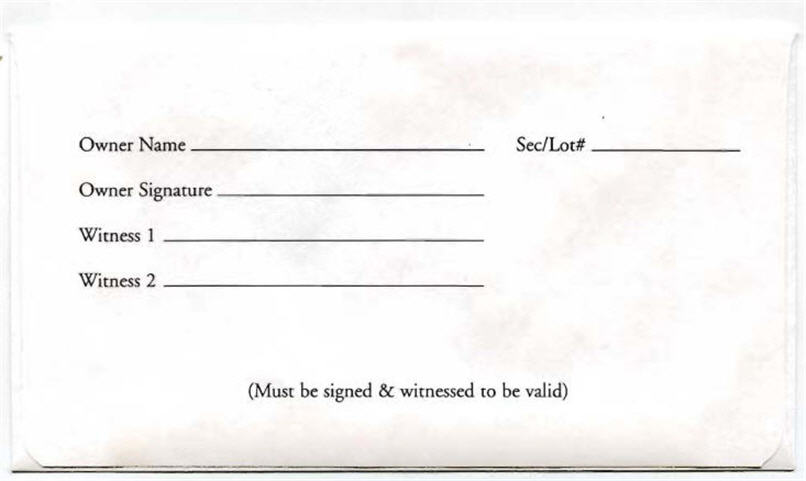
2005 Ballot Envelope
2007 Ballot Envelope

As used by LHCC, the proxy policy is nothing more than an election manipulation tool. Let’s review the 3 most recent LHCC board elections to understand what has changed and why. In each of these elections, the final outcome of who sits on the board would change based on the resolution of these challenges.

In the October 2005 election we solicited proxies almost exclusively from Membership Lot owners. Our success in capturing votes surprised LHCC’s leaders. Several facts from the 2005 election stand out:

2005 Election Facts
# Fact
#1 M & S builders voted lots they no longer owned and LHCC counted these votes
#2 LHCC counted more in person ballots than there were eligible voters who attended the meeting
#3 LHCC refused to count a proxy, claiming the owner voted in person – despite the person swearing under oath that she did not attend the meeting

The election results were very close, too close from the perspective of LHCC’s entrenched board. Our votes were almost all in the form of proxies. So LHCC apparently concluded it was time to develop a way to disqualify proxies before the next election. If LHCC’s directors could disqualify proxies, they could reduce our votes.

Before the October 2006 election ever took place, LHCC knew we would show up with over 400 proxies. We presented these proxies in the governing documents vote in June of 2006, so LHCC knew exactly what to expect that October. LHCC’s directors had to act, or they might have been voted out of office. Before the October 2006 election, LHCC adopted the policy that submitting any absentee ballot revoked a proxy, even if the proxy were executed after the absentee ballot was presented. This was the beginning of the proxy policy as a political tool.

The 2007 election attracted few candidates. There were 7 announced candidates running for 6 seats. One of the announced candidates was Rick Bleck, who did not meet the 1 year ownership requirement for nomination set forth in LHCC’s Bylaws and was invisible on the campaign trail but was elected anyway. Before the election took place, candidate Bill Masters challenged Bleck’s nomination, based on this simple statement in LHCC’s Bylaws:

All nominees must have been Members of the Association for at least one (1) year.

Bleck closed on his Lake Holiday home on October 12, 2006. The cutoff for nominations was September 5, 2007. Bleck obviously didn’t meet the 1 year requirement spelled out in the Bylaws. This presented a serious problem to LHCC’s entrenched board because it will go to just about any length to block Masters from winning a board seat. If Bleck’s nomination were found to be improper and therefore withdrawn, that would leave only 6 candidates – one of which would be Masters – running for 6 seats, virtually guaranteeing Masters a board seat.

The solution to this problem: pay LHCC counsel Rees Broome to produce a 3 page letter to try to explain that that 1 sentence in the Bylaws means something other than what it says. Reader beware: have a big bottle of aspirin handy before reading Rees Broome’s explanation because trying to follow their logic will cause your head to rotate more than once on your shoulders. Rees Broome has been the recipient of checks totaling hundreds of thousands of dollars, signed by LHCC’s entrenched board.

In the October 2007 we supported Bill Masters, who solicited proxies from Lake Holiday property owners. Masters added a new wrinkle to the proxy debate. Because of the cost of soliciting proxies, Masters solicited proxies good for 5 years. And that apparently scares LHCC’s directors.

So how did LHCC respond? By using association funds and resources to conduct a poorly disguised political attack on Masters. Mailed in an official LHCC envelope with a hard-to-miss yellow sticker claiming to hold “Important Information”, LHCC directors spent Association money to send out in early October what was nothing more than a blatant political campaign letter.
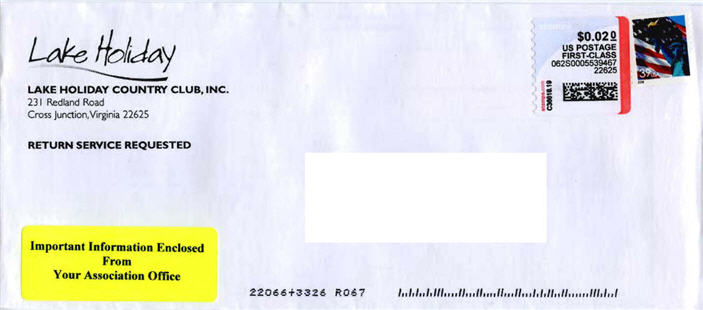
Envelope from LHCC Election Mailer

LHCC’s mailer attacked proxies generally and the Masters proxy in particular. The mailer also attacked Masters’ campaign positions. Amusingly, the letter misquoted one of Masters’ own campaign letters and falsely claimed that Masters’ calculation of the expected dam repair cost was wrong. Masters used actual numbers from the board meeting on the dam repair and did nothing more complicated than dividing the estimated total cost of the dam repair by the number of property owners actually paying dues. After misquoting the number in Masters’ letter, LHCC’s response was that “No arithmetic we know of gets to this number.” More simply: LHCC’s directors acknowledged they don’t know how to do basic arithmetic.

Three candidates, who also happened to be incumbent officers or directors – President Wayne Poyer, Treasurer John Martel, and Pat Shields – used association resources to mail out their own political response to candidate Masters, who used private resources to pay for his campaign. Wayne Poyer, John Martel, and Pat Shields failed to separate their roles as officers and directors of the association from their personal interests as candidates for re-election. At the bare minimum, they should repay the full cost of this political mailer. We challenge them to do so.

That’s the background for December 27th’s proxy policy discussion, which we present in 4 video clips:

YouTube player
«
Prev
1
/
1
Next
»
loading
play
Proxy Policy Pt 1
play
Proxy Policy Pt 2
play
Proxy Policy Pt 3
play
Proxy Policy Pt 4
«
Prev
1
/
1
Next
»
loading

At the meeting, all directors except VP Dave Buermeyer favored allowing proxies. Buermeyer continued to be against allowing proxies even though LHCC has a legal opinion from Steve Moriarty, former LHCC counsel, that proxies must be allowed. Pat Shields cautioned Buermeyer that “we need to follow our lawyer’s advice.”

The proxy policy that LHCC’s directors want to adopt is inherently unfair. Directors want an absentee ballot to revoke a proxy, even if the proxy is executed after the absentee ballot. The only way to revoke an absentee ballot is to show up in person at the election site. This is an easy task for a homeowner. But how about for the Membership Lot owner living in California? His only way to revoke an absentee ballot is to show up in person. The burden is very different for a homeowner who could just walk across the street compared to a Membership Lot owner who has to travel across country. Once LHCC directors capture an absentee ballot vote from a Membership Lot owner, they don’t want to let it go. So they make it very difficult and expensive to revoke.

Revoking an absentee ballot also shows a sloppy inconsistency in LHCC’s voting procedures. In September of 2005, LHCC was planning to hold a vote on new governing documents. At that time, we challenged in court LHCC’s refusal to let members change their absentee votes. LHCC subsequently canceled that scheduled vote and revised its procedures for revoking an absentee ballot. Those changes are reflected in the minutes of the 9/27/05 board meeting. The revised policy states that:

Eligible Members exercising their right to vote an absentee ballot retain the option of changing that absentee vote up to the deadline for all voting. Once an absentee ballot has been witnessed, mailed to and logged in by the office or registered agent, to change that vote the Member must attend the Membership meeting called for the purpose of that vote and, providing proper identification, request that the ballot be recovered for the purpose of recasting the vote.

That policy was adopted in the 2005 election. By 2007 it was abandoned. Compare the note at the bottom of the 2005 ballot to 2007’s version. 2005’s ballot says: “If you desire to change your absentee ballot you must do so in person at the annual meeting on October 22nd, 2005.” 2007’s ballot says: “Once submitted, this Absentee Ballot may not be retracted or changed.” The message from LHCC’s directors to members: Once we have your vote, we’re not giving it up.
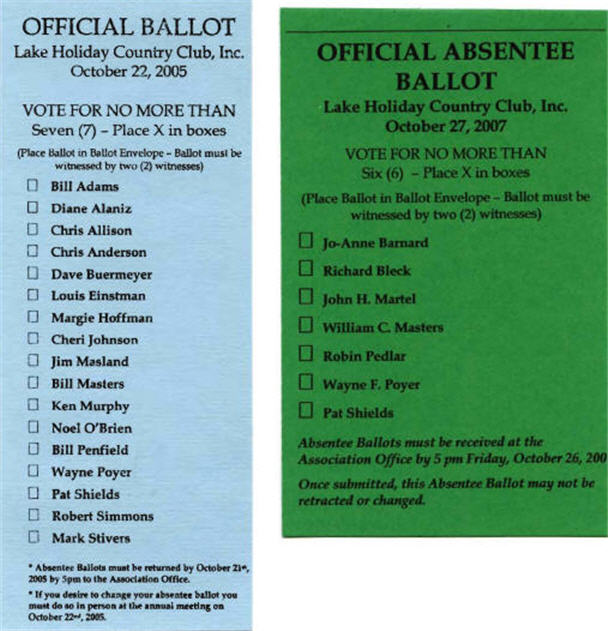
2005 vs 2007 Ballot

The proxy policy also is an attempt to modify LHCC’s Bylaws by board resolution. LHCC’s directors would like to require directed proxies, where the proxy spells out how the proxy holder will vote. Requiring directed proxies blocks unannounced floor nominations. If a candidate to be nominated on the floor is announced in advance, LHCC can discourage that candidate from accepting the nomination. But there’s no requirement that proxies be directed in either LHCC’s Bylaws or in Virginia’s Non-Stock Corporation Act. Wayne Poyer clearly understands that the Non-Stock Corporation Act places few restrictions on proxy use. He described the flexibility that the law puts on proxies to his fellow board members: “the back of an envelope is quite fine.” So what’s an entrenched board to do? Amend LHCC’s Bylaws without the required member vote and circumvent the act by passing a board resolution.

Above all else, LHCC uses false claims about proxies. At the December 27th meeting, Wayne Poyer said some voters gave up their vote for 5 years. That’s absolute non-sense. The proxy that Bill Masters solicited from property owners was revocable at any time by the person that granted the proxy. Revocation could be accomplished by something as simple as sending an email to the proxy holder.

The other false claim is that a proxy granter has somehow given up his vote. That view is expressed in the title of the board’s political attack on Masters: “Its Your Vote – Keep It.” Voting is expressing an opinion, and proxy granters have made a decision to express their opinion by executing a proxy. They have elected to work together to improve their chances of winning an election. There are legitimate reasons for voters to work together and vote by proxy. Voting by proxy gives someone other than LHCC’s board the ability to verify the accuracy of a vote. If 400 voters vote individually, the task of confirming that their votes were counted correctly is insurmountable. If 400 voters vote by proxy, that task becomes simple. LHCC’s directors apparently would rather members act in an isolated manner, have no chance of winning an election, and have no chance to independently verify their votes were counted properly. To keep power, try to divide the opposition.

It’s time for LHCC to clean up its elections.

Election Recommendations
# Election Recommendations
#1 Give every voter a fair opportunity to change his mind and have his most recent vote counted. That means if a proxy is executed after an absentee ballot, count the proxy. If an absentee ballot is executed after a proxy, throw away the proxy and count the absentee ballot.
#2 Don’t make it any harder for a Membership Lot owner to change his vote than it is for a homeowner that lives next door to the polling place. Treat all owners fairly. Let owners undo an absentee ballot easily. A proxy executed after the absentee ballot is one way to do this.
#3 Stop focusing attention on how people vote, be it in person, by absentee ballot, or by proxy. Stop criticizing others who opt to express their vote in any particular manner. A vote by proxy is just as much a vote as that made in person. Someone who votes by proxy is every bit as smart and sophisticated as someone who shows up to vote in person.
#4 Stop all political mailings from the office, period. If candidates want to spend their own money to campaign, let them.
#5 Acknowledge that the October 2007 attack on Masters was a political one, and make the politicians who benefited from it – Poyer, Martel, and Shields – pay for it.
#6 Take the office – controlled by the entrenched board – out of politics altogether. Have the absentee ballots mailed to an independent vote counter. Stop accepting ballots hand-delivered to the office.
#7 Stop hiring armed guards to defend a homeowners’ election. Third-world dictators have armed guards at elections. Responsible community association leaders do not. Its an unbecoming mix of menacing and pathetic, and it only exposes how far some LHCC directors will go to keep power.

Until LHCC’s directors implement these changes to election rules, the community’s elections will continue to take place under a cloud of suspicion and mistrust.

How informative did you find this post (1=lowest, 10=highest) ? Terrible2 Stars3 Stars4 StarsAverage6 Stars7 Stars8 Stars9 StarsTerrific!Loading...

Filed Under: 10/05 Election, 10/06 Election, 10/07 Election, Board Conduct, Board Meeting, Membership Lots Tagged With: Buermeyer, Martel, Masters, Miller-&-Smith, Moriarty, Pat-Shields, Poyer, Rick-Bleck, voting

We Probably Will Not Meet That

January 21, 2008 By LakeHolidayNews

LHCC President Wayne Poyer
Back in April of 2007, we wrote about the contingent payments that LHCC might receive from Aqua Virginia. These payments made it on to LHCC’s 2006 financial statements, audited by Kositzka Wicks & Co of Alexandria. They made it on in a big way – in the amount of $794,213. In our April post, Dear Mike Kilmer, we criticized allowing contingent gains that might never be received to be recorded on financial statements. We expressed the view that recording contingent gains was inconsistent with the accounting principle of conservatism and inconsistent with FAS No. 5. Despite this criticism, the only response we received was from Mike Kilmer, which was really no response at all. Through LHCC’s 11/30/07 Balance Sheet, the most recent one we have available as of this writing, the contingent gain remains on the books.

We quote from Kositzka Wicks’ 2006 audit letter:

…we conducted our audits in accordance with auditing standards generally accepted in the United States of America. Those standards require that we plan and perform the audit to obtain reasonable assurance about whether the financial statements are free of material misstatement. An audit includes examining, on a test basis, evidence supporting the amounts and disclosures in the financial statements. An audit also includes assessing the accounting principles used and significant estimates made the Association…

2007 is now in the history books, and we don’t think any check is coming from Aqua Virginia for 2007’s contingent payment. Let’s forget what actually took place and consider only the reasonableness of the estimates provided by LHCC.

In our earlier post, we provided a variety of readily available data to show that no reasonable estimate would predict the contingent payments would be received for the next several years. In fact, Aqua Virginia’s publicly available SCC filings from February 2007 show that their accounting entries do not record these contingent payments on their financial statements. If Aqua Virginia’s auditors believed there was a reasonable expectation that these contingent payments would be made, wouldn’t they be recorded on Aqua Virginia’s books?

Did LHCC give its auditors complete and accurate information?

In February, Wayne Poyer told the auditors in his management representation letter:

There are no estimates that may be subject to a material change in the near term that have not been properly disclosed in the financial statements. We understand that near term means the period within one year of the date of the financial statements.

Then, in July Lake Holiday homeowner Bill Masters raised the issue of collecting the contingent payments at a public meeting. Wayne Poyer openly told members:

Mr. Masters criticizes the $76,000 which Aqua America will return to the association, assuming we meet a certain number of hookups. And he’s right about that, that’s part of the contract. He’s also right that during this terrible market downturn we’ve got, we probably won’t meet that.

Here’s an actual audio recording of Wayne Poyer’s remarks:

https://www.lakeholidaynews.com/wp-content/uploads/sites/244/2008/01/Probably_wont_meet_that.mp3

We. Probably. Won’t. Meet. That.

Evidently, Wayne Poyer convinced the auditors on February 26th that the Aqua Virginia contingent payments would be received. Then he flip-flopped when speaking to members – a little more than 4 months after his representation to the auditors. That seems to fall within the near term time frame, and not getting the money seems to be material.

Maybe not collecting the early year payments that make up the $794,213 is not a “material change” to Wayne Poyer.

Unfortunately, LHCC’s representations to its auditors also raise other questions. Wayne Poyer informed the auditors that “…as of February 26, 2007…there are no liens or encumbrances on such assets nor has any asset been pledged.” Really? Does the $750,000 Wachovia note executed on February 2, 2007 count? Does the deed of trust pledging LHCC real estate count? Those documents are part of the balloon note that Wayne Poyer and John Martel signed to refurbish the clubhouse. Both the loan documents pledging assets and the letter to auditors claiming there were no assets pledged were signed by the same person – Wayne Poyer.

These are simple and straightforward representations to LHCC’s own auditors. Why aren’t they accurate?

How informative did you find this post (1=lowest, 10=highest) ? Terrible2 Stars3 Stars4 StarsAverage6 Stars7 Stars8 Stars9 StarsTerrific!Loading...

Filed Under: Board Conduct, Finances Tagged With: Aqua-Virginia, Kilmer, Kositzka-Wicks, Martel, Masters, Poyer

Suzy Marcus, Silent Sitter

January 8, 2008 By LakeHolidayNews

Rick Bleck, who did not meet the 1 year ownership requirement for nomination set forth in LHCC’s bylaws and was invisible on the campaign trail but was elected anyway, was absent from the December 27th meeting. Rick was the two-time defending champion (if that’s the right phrase) in our Silent Sitter contest. In fact, up to this point, Rick has won every Silent Sitter award we’ve given, since we’ve only given 2. We’re not sure if he was busy or has a strong sense of fair play that required him to give another director the chance to win the Silent Sitter award.

12/27/07 Winner, Suzy Marcus
Given a fair chance, somebody other than Rick Bleck did win our Silent Sitter award. That person is Suzy Marcus. Congratulations, Suzy! You’re our Silent Sitter for the December 27th meeting. Ever since we conceived copied the idea for the Silent Sitter award, we just knew that as long as she showed up, Suzy Marcus would put in a strong showing. The video clip Oops We Goofed (also linked in our post Twenty Certified Letters Later… and on our Videos page) pretty much includes Suzy Marcus’s entire contribution at a meeting that was well over 2 hours in length. In other words, if you don’t count silence, she didn’t contribute very much. When you consider that board members get their board books in advance of the meeting so they can show up ready and prepared to contribute, there’s simply no excuse for that much silence.

Suzy was absent from the 11/26 board meeting, at which she was responsible for presenting an “Open Discussion on Realtor Outreach.” Presumably, she was planning to lead a discussion of ways to help market the Lake Holiday community to real estate agents. When she was absent in November, this topic was moved to December. Perhaps she forgot about her own agenda item. We didn’t. Any benefits from a realtor outreach have now been delayed for 2 months. Sellers may not take kindly to a board that talks tough about a challenging real estate market but when it’s time for action only procrastinates. Chalk it up to having Silent Sitters on the board.

We do have sympathy for Rick Bleck, Suzy Marcus, and every future Silent Sitter. It’s very difficult to break out of the Silent Sitter role, as our video Only 3 For the DEC demonstrates. The DEC is LHCC’s Development Executive Committee, and this committee is where the important stuff happens. As Wayne Poyer explained in the following video, the DEC manages the relationship with Miller & Smith, the biggest developer at Lake Holiday. The DEC also handled the initial relationship with potential golf course purchasers and developed the Utility Extension Program (UEP). In other words, it plays a lead role in critical development issues at Lake Holiday before these issues ever reach the board.

After Wayne Poyer described the DEC at the board’s November organizational meeting, a number of directors jumped at the chance to serve on this important committee. Directors Noel O’Brien and Robin Pedlar, two directors who could challenge for a Silent Sitter award in any given month, wanted to serve. But alas, after offering the tease of what the DEC got to work on, Wayne Poyer explained that there are only 3 seats on the DEC. Without further explanation, these potential Silent Sitters who wanted to contribute just had to understand that Wayne Poyer, John Martel, and Dave Buermeyer would take over the DEC. Is it unusual that 3 men appear to just assume they should dominate this committee and 2 women appear to just understand that this committee is not for them?

Why aren’t Noel O’Brien and Robin Pedlar on the DEC?

We’re reminded of LeeAnn Stevens’ comments about former LHCC President Chris Allison’s attitude toward women:

Chris [Allison] has a real problem with women. We don’t have brains. Our opinions don’t matter. He’s not going to give her the time of day.

https://www.lakeholidaynews.com/wp-content/uploads/sites/244/2008/01/Chris_Allison_has_a_problem.mp3

Silent Sitters like Suzy Marcus and Rick Bleck have to overcome more than any general reluctance to contribute. They’re fighting against a highly concentrated leadership that blocks them from tackling important tasks.

As much as board members may claim to dislike our Silent Sitter award, the powerful few cherish the existence of Silent Sitters like Suzy Marcus.

How informative did you find this post (1=lowest, 10=highest) ? Terrible2 Stars3 Stars4 StarsAverage6 Stars7 Stars8 Stars9 StarsTerrific!Loading...

Filed Under: Board Conduct, Board Meeting, Silent Sitter Tagged With: Allison, Buermeyer, LeeAnn-Stevens, Martel, Miller-&-Smith, Poyer, Rick-Bleck, Robin-Pedlar, Suzy-Marcus

Twenty Certified Letters Later…

January 6, 2008 By LakeHolidayNews

…can the President of LHCC just pick up the phone, call a homeowner, and say “Oops, we goofed. We’re truly sorry”? Apparently not.

That answer was hidden away in a tab of LHCC’s board book called “For Your Interest.” LHCC directors now bury letters and emails from property owners to the board in this tab instead of reading and discussing them during the open meeting. That’s one way of blocking criticism from making its way to video and onto the internet.

Fortunately for Lake Holiday property owners, this “don’t discuss criticism” technique flopped at the December 27th board meeting.

The first example of this involves homeowner Robert Middleton, whose property was hit with a lien of $1800 for alleged violations of Lake Holiday’s sign prohibitions. A hit of $1800 – ouch! As the board discussed in our Compliance Reporting video (it’s in our video gallery on our Videos page), if Middleton violated any sign prohibition, he didn’t do it on his own property. In that video, GM Ray Sohl said that the signs should have simply been taken down instead of placing liens on Middleton’s property. It’s possible that Middleton himself watched the video and used it to support an argument that the liens should be removed, which is something that the board did not acknowledge at the November meeting. At the December 27th board meeting, shown in the following video, the board finally decided that Middleton is “no longer liable for $1800.” It’s good that LHCC reversed course on this issue.

The board discussed how to communicate this good news to Middleton, who apparently refused to accept several recently-mailed certified letters from LHCC. Ray Sohl described that LHCC has sent 20 certified letters to Middleton over this alleged violation, which apparently turned out to be no violation at all. Perhaps Middleton grew tired of seeing his own money spent to send him certified letters to communicate the message “We are 100% right, you are 100% wrong, so we’ve put an additional lien on your property.” An unsurprising outcome.

Some directors were reluctant to communicate with Middleton directly. In the video the best option developed by LHCC President Wayne Poyer was to put a message in a plain, unmarked envelope addressed by hand. That only seems strange to someone who does not understand that the board prefers to sneak their good news to Middleton to avoid having to acknowledge their error. Director Pat Shields even recommended no further effort to reach out to Middleton, ignoring that LHCC decided to remove the lien. Shields tried to focus attention on Middleton as the culprit, rather than LHCC itself: “He’s played the rules since this whole thing started.”

We have a simple suggestion for LHCC: have a senior official pick up the phone and call the man. Try starting the conversation off with: “Ooops, we goofed. We’ve removed the liens. We’re truly sorry.” Stop trying to shift the focus to Middleton’s alleged wrongdoing and away from the fact that LHCC improperly filed liens. We’re sure a straightforward, sincere apology will go a long way toward addressing any bad feelings Middleton may have.

Ray Sohl supported further efforts to reach out to Middleton for a good reason:

…you want to encourage participation of all members. The more participation you have, the more responsible community you have.

The secretive “For Your Interest” tab also revealed the second example of the unwillingness of LHCC’s leaders to admit a mistake. In our post It’s Not Our Problem Anymore we criticized LHCC’s efforts to wash its hands of helping property owners deal with utility problems. Apparently, LHCC has reversed course on this issue. LHCC Secretary Ken Murphy, a former LHEUC board member, has initiated efforts to communicate with Aqua Virginia and the SCC about utility complaints from Lake Holiday homeowners. Judging from the discussion in the video, complaints continue to roll in. We don’t see entirely smooth sailing, based on Murphy’s comment that he has “yet to identify the person at Aqua who will listen to me.” A little more than 1 year ago, LHCC closed on the sale of LHEUC’s assets for more than $1 million, and Aqua Virginia continues to serve Lake Holiday. Given those facts, one would hope that the board identified some responsible people at Aqua Virginia who would listen. One would also hope the board kept the contact information of those people. Nevertheless, we applaud this long-overdue correction.

Burying these 2 fixes in a section of the board book that is not intended for open discussion shows just how hard it is for LHCC’s leaders to admit they made a mistake. When faced with having to admit its error in putting a lien on Middleton’s property, the board preferred to communicate via cold and impersonal certified letters rather than a simpler and cheaper phone call. The personal phone call is both simpler and more appropriate in this situation.

Lake Holiday property owners are justifiably concerned about utility problems, and the board has tried to distance themselves from these concerns. If the board abandoned that effort and plans to play an active role in resolving these problems, that’s a good thing. The proper response to both our post and the complaints raised by others would have been to publicly acknowledge the mistake and openly commit to a new course.

Stubbornly refusing to admit a mistake sends an “I’m unreasonable” message to the world.

How informative did you find this post (1=lowest, 10=highest) ? Terrible2 Stars3 Stars4 StarsAverage6 Stars7 Stars8 Stars9 StarsTerrific!Loading...

Filed Under: Board Conduct, Board Meeting, Utilities Tagged With: Aqua-Virginia, Locke, Middleton, Murphy, Noel-OBrien, Pat-Shields, Poyer, Ray-Sohl

2007 Year In Review

January 1, 2008 By LakeHolidayNews

Update: In response to feedback, we’ve adjusted the audio track and added a break of a few seconds about halfway through the video.

How informative did you find this post (1=lowest, 10=highest) ? Terrible2 Stars3 Stars4 StarsAverage6 Stars7 Stars8 Stars9 StarsTerrific!Loading...

Filed Under: Board Conduct, Board Meeting, Finances, Membership Lots, Utilities Tagged With: Allison, Aqua-Virginia, Fuerst, Kearney, LeeAnn-Stevens, Locke, Margie-Hoffman, Martel, Miller-&-Smith, Poyer, Rick-Bleck

Primary Sidebar

Recent Comments

  • Leona Garland on What You Weren’t Told About the Utility Sale
  • Leona Garland on LHCC Dues Are Too High By As Much As 46%
  • scott on LHCC Dues Are Too High By As Much As 46%
  • Eric on Jill Holtzman Vogel Rushes To Help Out Big Developer
  • Puzzled on Jill Holtzman Vogel and SB 1489: The Sequel To A Flop

Categories

General

  • Lake Holiday
  • Wikipedia Entry on Lake Holiday

Government

  • Virginia CIC Liason
  • Virginia Law
  • Virginia SCC Div of Energy Reg
  • Virginia SCC Docket Search

Other Builders

  • Lake Holiday, LLC

Other Voices

  • SchoolMatters.com Frederick Cnty
  • Summit Advisor Current News
  • Summit Advisor Forum

Copyright © 2005–2026 · WordPress · Log in